Small boat, catamaran or classic — the real differences
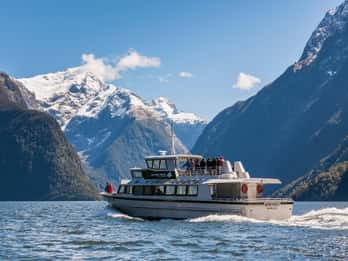
The small boat is the closest-to-the-water option: two hours, the full length of the fiord out to St Annes Point at the Tasman Sea, and decks low enough that the waterfalls feel personal. Tea, coffee and hot chocolate are free; there is no food service, and bringing your own is explicitly fine. Reviewers love exactly this format — and the critical ones add two caveats: on busy departures even the small boat can feel full, and captains sometimes nose right under a waterfall, which means getting soaked rather than sprayed. Pack a rain layer and a change of clothes, and read that as a feature warning, not a flaw.
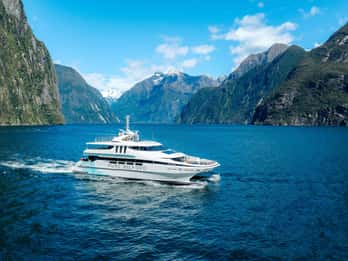
The glass-roof catamaran is the stay-dry option: three decks, a café and bar, and a roof that keeps the 1,000-metre walls in view from inside — which matters in a place with more than 200 rain days a year. It is also the clearest accessibility pick, with a caveat that depends on the vessel: the Gem of the Sound has a wheelchair-accessible lower deck including the toilet, while on the Maiden of Milford the toilet sits above a steep staircase. Critical reviews note that on full departures the best views are still from the open decks, and the small café can queue at peak times.
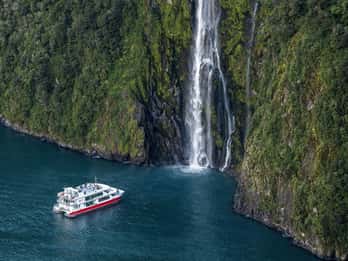
The classic larger vessel runs close to the Stirling and Bowen falls and past the Copper Point seal colony, with commentary through a free app in eight languages and the only pre-bookable lunch at the wharf — picnic or buffet, arranged at least 24 hours ahead. The reviews add a caution worth its own sentence: on some departures the “buffet” turns out to be a picnic hamper with pre-made sandwiches, so check which option your departure carries before paying for it. Reviewers also time some sailings closer to 1.5 hours than the listed maximum of two.
The timing strategy: avoid the middle of the day
The coach tours from Queenstown and Te Anau all reach the fiord around midday — which makes the middle of the day the fullest slot on the water, on every vessel. Self-drivers hold the one advantage no coach passenger has: you pick the departure time. Early sailings meet the fiord before the coaches arrive; late-afternoon sailings meet it after they leave, and the small boat runs some of the latest afternoon departures at the wharf. We have not yet verified the exact departure times for each boat — they shift with the season — so treat the pattern as the strategy and check the current timetable on the product page when you book.
Two practical notes for the wharf itself: parking at Milford is paid, with a free alternative further out at Deepwater Basin that costs you a walk of about 20 minutes — and the whole wharf area is notorious for sandflies, so repellent belongs in the daypack. Once you are on the water, they are gone.
What no cruise can promise
Wildlife: the fur seals at Copper Point are a good chance, dolphins and penguins a genuine possibility — none of it guaranteed, on any boat. The underwater observatory at Harrison Cove has been closed since storm damage in September 2024; no current cruise includes it, and listings that still promise it are out of date. And the weather does what Fiordland weather does — which, as our weather page argues in detail, is more of a show than a problem.
★
In short
Small boat for closeness and the late slots, catamaran for staying dry and accessibility, classic vessel for lunch and departure choice. Whichever you pick: book a slot away from midday if you can — it is the cheapest upgrade on the fiord.